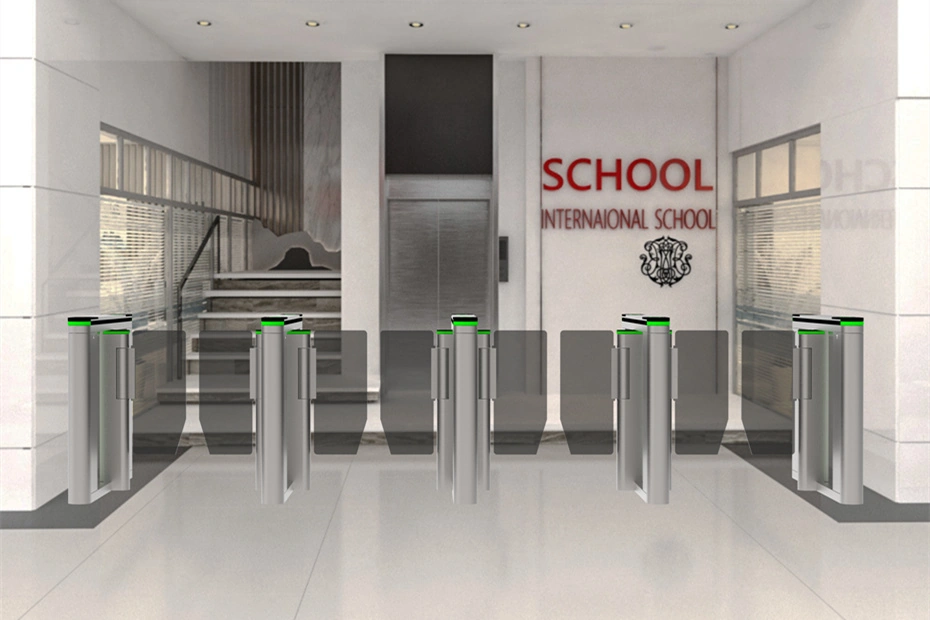
An optical turnstile works by combining infrared sensor detection, access control logic, and motor-driven barriers to manage pedestrian entry without relying solely on mechanical obstruction. This sensor-based approach allows modern buildings to maintain an open visual environment while still enforcing precise access rules. As workplaces, transport hubs, and commercial spaces demand higher efficiency and better user experience, optical turnstiles have become a preferred access control solution.
Optical Turnstiles Definition
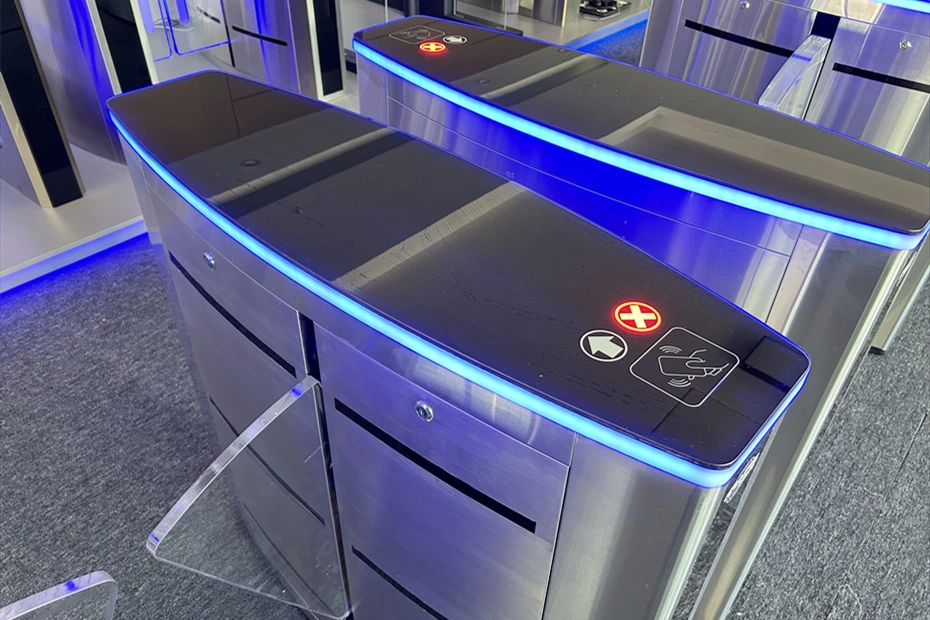
An optical turnstile is an access control gate. It uses optical sensors to spot and check people’s movement before letting them pass. Rather than relying just on physical spin, optical turnstiles depend on infrared detection and system logic to confirm allowed entry. After credentials get checked via RFID cards, QR codes, or biometric systems, the turnstile opens on its own. Then it shuts once the passage ends.
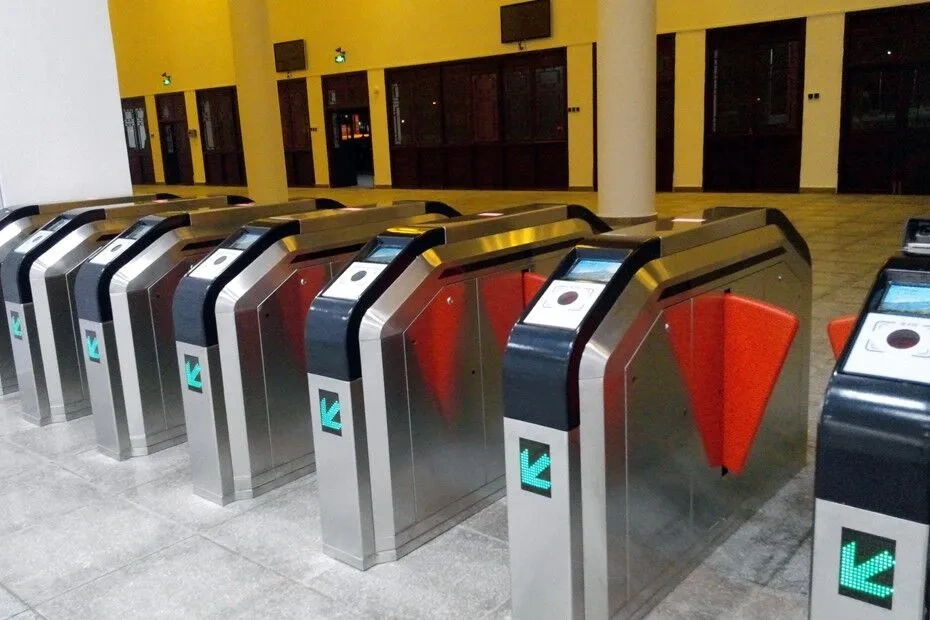
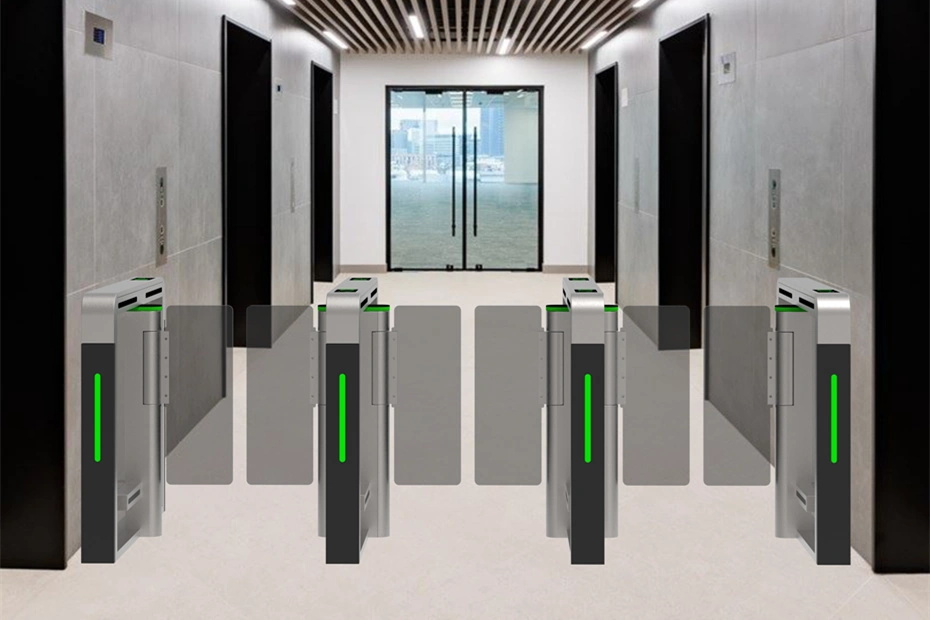
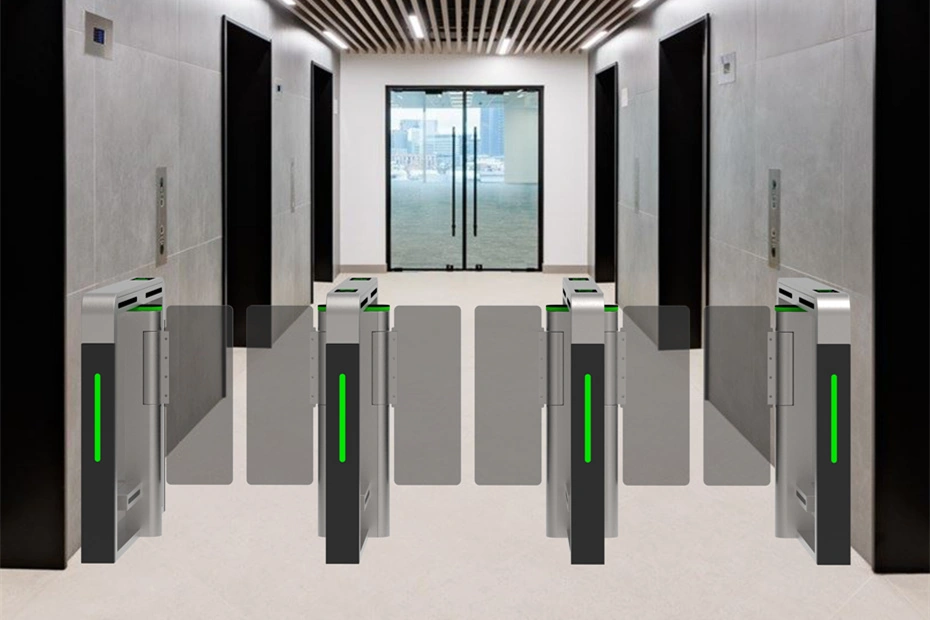
Optical swing turnstiles gain much favor in new building styles. They use clear glass barriers to make a neat, open look. In office halls and business doors, types like the Flap Barrier Turnstile Gate JS-Y003 see frequent picks. This is because they mix managed access with an even visual flow that suits modern design rules.
How Does an Optical Turnstile Work?
Infrared Sensor Working Principle
An optical turnstile works by continuously monitoring the passage lane using infrared sensors installed along the entry path. These sensors emit invisible infrared beams that detect when a person enters the lane. Once movement is detected, the system immediately evaluates whether valid access credentials have been presented.
This real-time detection allows optical turnstiles to respond naturally to walking speed. In high-traffic environments such as office entrances, flap-style designs like the Flap Barrier Turnstile Gate JS-Y006 are commonly used because their sensor layout supports fast, uninterrupted pedestrian flow.
Signal Processing and Control Circuit Operation
Sensor signals are processed by a control circuit that analyzes movement patterns, authentication status, and direction of travel. The control board filters and compares sensor data to predefined rules, ensuring that only one authorized person passes per validation.
Once authorization is confirmed, the motor drive system activates the barrier. In swing-style optical turnstiles, this results in a smooth opening motion rather than an abrupt mechanical movement. This controlled operation is a key reason why premium environments often adopt swing gate solutions such as the JS-BZ003 Luxury Swing Gate, which emphasizes both stability and refined motion.
Targeted Infrared Beam Detection Mechanism
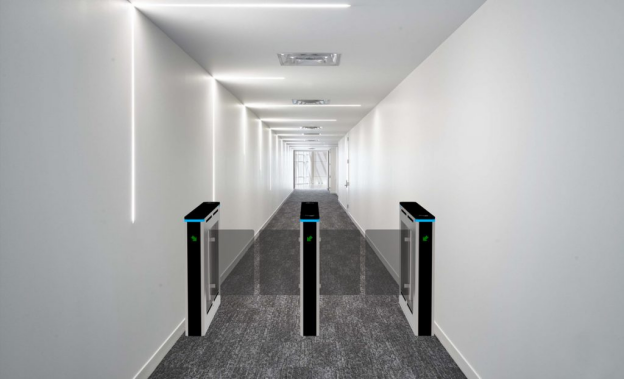
In addition to reflective sensing, optical turnstiles also rely on paired infrared beams that form an invisible detection curtain across the lane. When these beams are interrupted in a specific sequence, the system can determine walking direction, detect tailgating, or identify reverse entry attempts.
This layered detection method is particularly important in locations where security requirements are higher than average. Optical turnstiles equipped with advanced beam logic, such as systems using high-speed gate structures, are well-suited for environments where accuracy is as important as throughput.
Why Use Optical Technology?
Fast System Response
Optical turnstiles are designed to respond instantly to pedestrian movement. Infrared sensors react within milliseconds, allowing barriers to open without forcing users to stop or wait. This responsiveness improves overall flow and reduces congestion during peak hours.
High Reliability and Long Service Life
Optical sensors operate without physical contact, which significantly reduces mechanical wear. This design improves system reliability and extends service life, making optical turnstiles suitable for continuous daily operation in busy facilities.
Easy Installation
Infrared sensors are compact and straightforward to install. Once positioned correctly, sensor calibration is handled through software parameters rather than complex mechanical adjustments, simplifying both installation and future maintenance.
Optical Turnstiles Components
Optical Sensors
Optical sensors are installed at multiple heights and positions to ensure accurate detection of people, luggage, and movement direction. This multi-level arrangement prevents missed detections and improves anti-tailgating performance.
Barrier Arms
Barrier arms in optical turnstiles are typically made of tempered glass or acrylic. These materials provide a visible boundary without blocking sightlines. In office and commercial settings, flap barriers such as those used in the Flap Barrier Turnstile Gate JS-Y011 are often chosen for their compact footprint and clean appearance.
Control Panel
The control panel manages sensor input, motor output, and communication with access control devices. It acts as the system’s decision center, coordinating every stage of the access process.
Optical Turnstiles Functions
Sensor-Controlled Passage
Optical turnstiles allow passage only when sensors receive a valid open signal from the access control system. Unauthorized attempts trigger alarms or stop barrier movement, ensuring controlled access at all times.
Tailgating Prevention
Tailgating prevention is achieved by monitoring the timing and sequence of sensor interruptions. If multiple people attempt to pass on one authorization, the system reacts immediately.
Aesthetics and Efficiency
Optical turnstiles combine functional security with architectural appeal. Transparent materials and slim housings help entrances remain welcoming while maintaining order.
Accurate Sensor Technology
Multiple photoelectric sensors work together to provide precise detection. This accuracy allows the system to adapt to different walking speeds and traffic patterns.
خيارات التخصيص
Optical turnstiles can be customized with LED indicators, barrier heights, and housing finishes. These options allow the system to match both security requirements and design preferences.
Throughput Performance
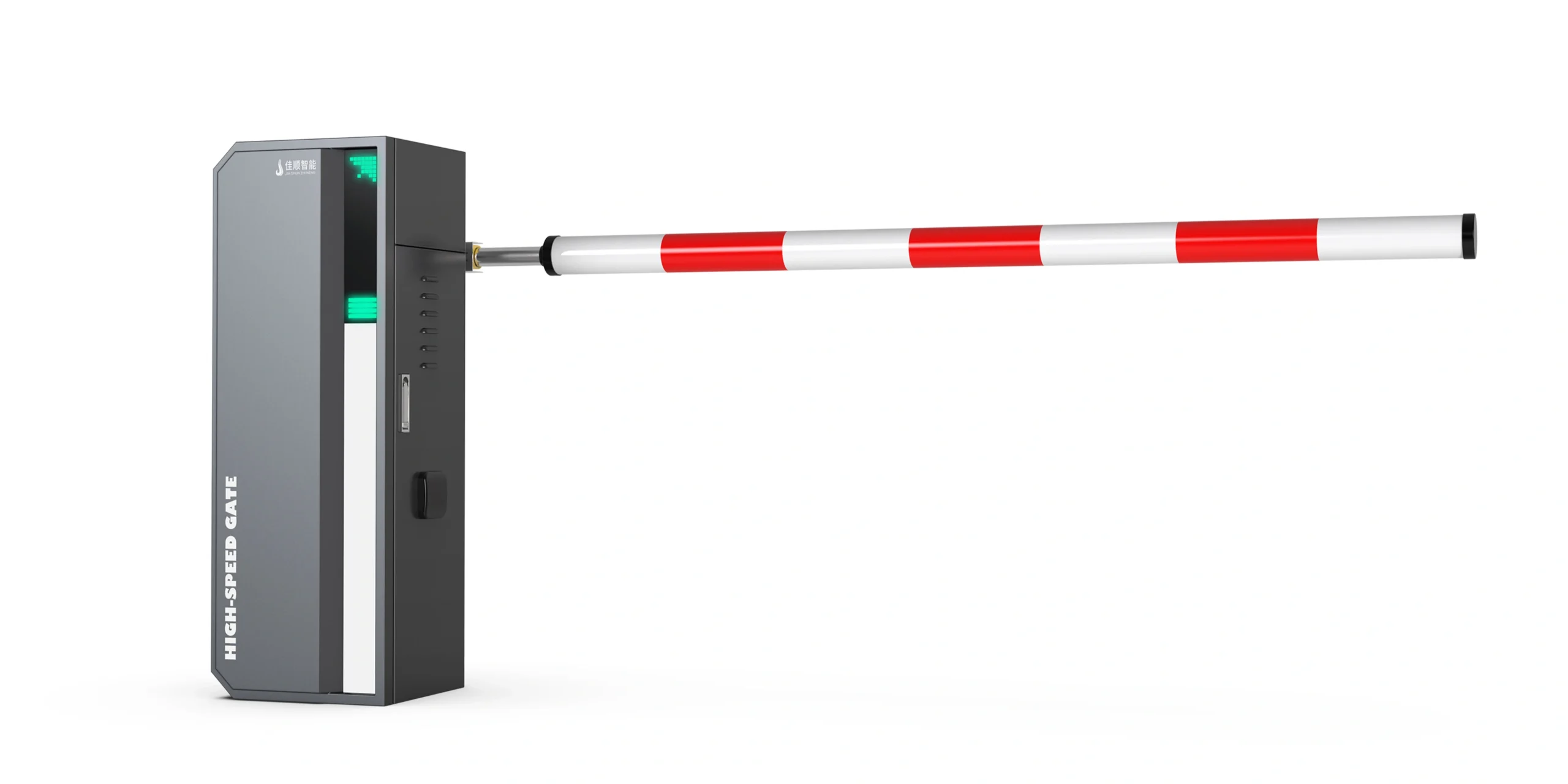
High throughput is a defining feature of optical turnstiles. Speed gate configurations, including designs similar to the High Speed Gate JS-STM011, are often used in locations where rapid movement is essential.
Access Control Integration
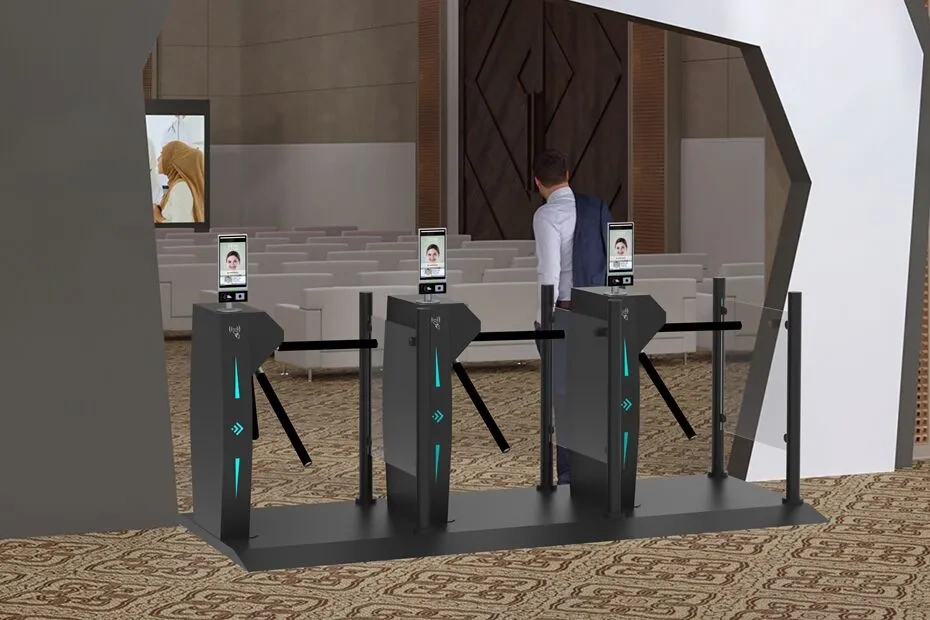
Optical turnstiles integrate with RFID cards, facial recognition, QR codes, and PIN systems. Successful authentication automatically triggers barrier operation.
Optical Turnstiles Applications
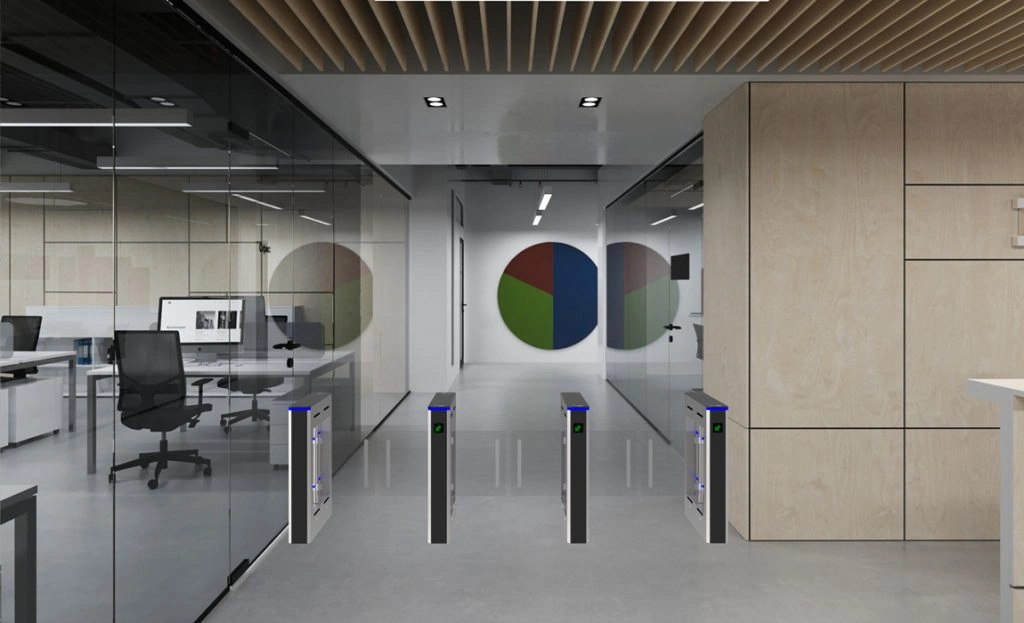
Optical turnstiles are widely used in corporate offices, government buildings, transportation hubs, stadiums, and exhibition centers. Their ability to combine security, efficiency, and aesthetics makes them suitable for both public and private spaces.
How KARSUN Turnstile Delivers Reliable Optical Turnstile Solutions
Our Experience in Optical Swing Turnstile Design and Manufacturing
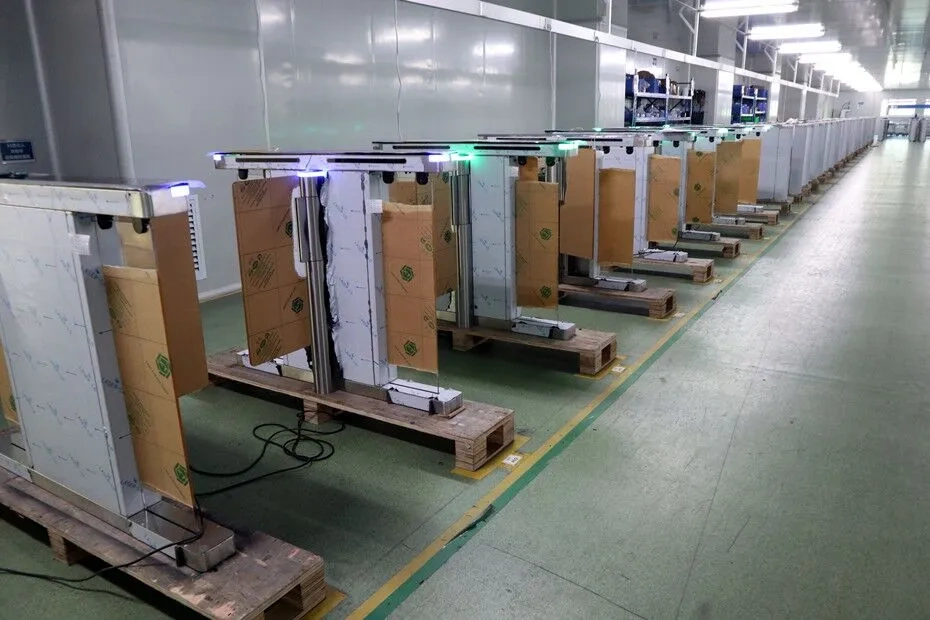
At KARSUN turnstile, we focus on designing optical turnstiles that perform reliably in real-world environments. We prioritize stable motor systems, precise sensor layouts, and durable materials to ensure consistent operation under continuous use.
Application-Oriented Optical Turnstile Product Lines by KARSUN Turnstile
At KARSUN turnstile, we develop optical turnstiles based on application needs rather than one-size-fits-all designs. For standard office and commercial projects, flap barrier solutions such as the Flap Turnstile Gate JS-Y004 provide efficient access control without compromising appearance. In premium or high-visibility entrances, swing gate systems like the JS-JSTD9151-21 Luxury Swing Gate offer wider lanes and enhanced visual impact.
System Integration and Customization Capabilities at KARSUN Turnstile
At KARSUN turnstile, our optical turnstiles are built for seamless system integration. We support multiple authentication methods and tailor sensor logic, barrier materials, and finishes to suit specific project requirements.
الأسئلة الشائعة
Q: How does an optical turnstile work for modern buildings?
A: An optical turnstile works by using infrared sensors to detect pedestrian movement and verify access credentials before opening the barrier. Systems from KARSUN turnstiles are designed to support high throughput while maintaining accurate detection.
Q: How to choose an optical turnstile for an office lobby?
A: Selecting an optical turnstile depends on traffic volume, security level, and design goals. Swing or flap barrier optical turnstiles are commonly chosen for office lobbies because they balance efficiency and aesthetics.
Q: Optical turnstile vs traditional turnstile, which is better?
A: Optical turnstiles provide smoother passage, better appearance, and more advanced security logic compared to traditional mechanical turnstiles, making them more suitable for modern environments.
Q: What brand of optical turnstile is suitable for high-traffic areas?
A: High-traffic areas require optical turnstiles with fast sensor response and durable components. KARSUN turnstile designs its products to handle continuous operation in demanding environments.
Q: What factors influence optical turnstile cost?
A: Optical turnstile cost depends on sensor configuration, barrier type, access control integration, and customization level. Advanced swing gates and speed gates typically involve higher investment due to their components and design.