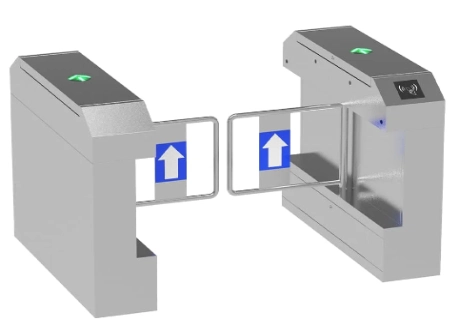
The purpose of a pedestrian turnstile is to control the flow of pedestrians during normal building operations. However, in a fire emergency, the turnstile must be operated to allow people to exit the building as quickly as possible and be provided with safe means of egress.
A modern fire safety turnstile connects with a building’s fire alarm system. It releases the barrier when required, can be used manually as well and enables staff to check whether all lanes have been released correctly.
Find out about emergency gates through this guide and learn how to choose the best type of turnstile as well as discover the right model from KARSUN’s turnstile range to manage access of people safely and securely.

Why Fire Safety Matters in Turnstile Design
Most turnstiles verify a creditcard, QR-code, bio credential or ticket before they open up. The sensors inside the barrier check if one person has passed through it.
The access rule for the barrier could change during a fire event. The barrier could be unlocked, dropped, retracted or opened automatically depending on the design of the turnstile and the building evacuation strategy.
A safe system should provide:
- Fire alarm signal linkage
- Automatic emergency release
- Manual release for trained staff
- Clear alarm and status indicators
- A suitable accessible evacuation route
- Regular emergency testing
Safety should not be overruled by security in an evacuation situation. The fire alarm, the access control system and the turnstiles must function as one system.
Why Fail-Safe Operation Matters
A failure of power is one of the most important faults to consider. If a turnstile locks up after a power failure it could cause serious problems during an evacuation.
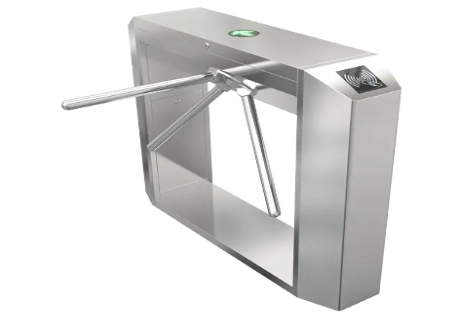
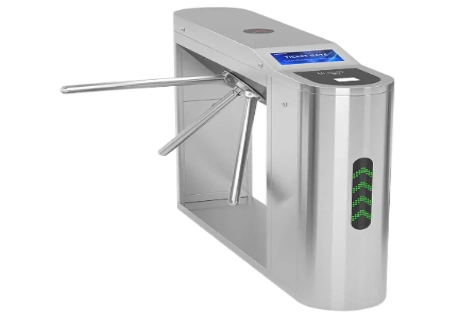
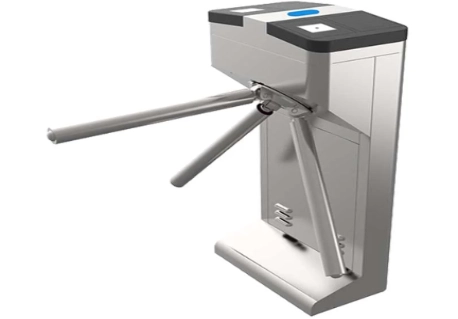
JS-SGZ001 Bridge Tripod Turnstile Gate – With drop-arm for power failure condition, a 3 arm configuration allows single person passage during normal usage and allows arm to drop in an emergency to provide a clear passage.
The final setting will depend on local fire regulations and the building’s safety plan. All product features will be tested after installation.
How Should a Turnstile Respond During an Emergency
Emergency sequences must be fast and clearly understandable. After a fire alarm signal has been sent, the turnstile controller must change to an appropriate mode in order to release the corresponding barrier.
Fire Alarm Signal Linkage
The turnstile can receive an emergency signal via a dry contact, a relay or other compatible control interface. It must be defined whether all turnstiles are released at the same time or if different areas of the system react separately.
Every entrance may open at once for a small office, whereas a large campus, public venue or metro station can have many zones with different evacuation routes.
Connect, test and document the signal. A fire safety function that has never been tested should not be assumed to be working.
Automatic Release and Manual Control
Different turnstile types release in different ways:
- A tripod turnstile may drop its arm
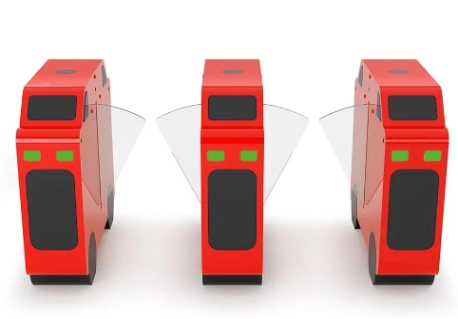
- A flap barrier may open its wings
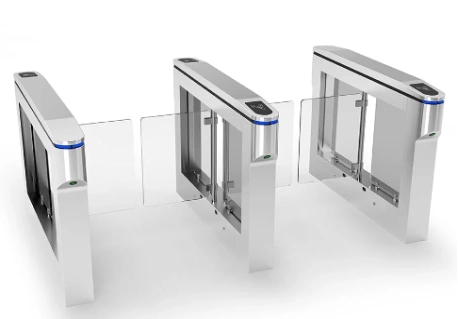
- A sliding turnstile may retract its glass panel
- A high speed gate may unlock its swing panels
- Waist height rotating gate releases the rotating part of the gate.
In addition to being able to acknowledge the alarm, staff should also have the option of a manual release. This could be in the event of a delayed signal, sensor failure or even a building-specific safety drill.
The manual setting should be clearly marked to allow trained staff to check Normal Open, Normal Closed, Emergency Release and Alarm Action settings.
Emergency Monitoring
The system should log time of alarm, time of end of barrier and time when normal access control is available again.
An autocheck function for a turnstile allows you to monitor the position of the barrier, the status of sensors, communication with the controller and any irregular movement. Facility staff can be alerted of any problems before they become an emergency.
Which Turnstile Type Fits Different Facilities
The best turnstile gate depends on a number of criteria, including expected traffic volume, user type, gate space, accessibility, and emergency exit requirements.
Tripod Turnstiles for Staff Entrances
Tripod turnstiles are generally used at factories, offices, health clubs, schools and campuses because of their compact size and ability to control single people at a time.
JS-SGZ001 Bridge Tripod Turnstile Gate is made of SUS304 stainless steel, supports access control, emergency call function and communication interface like dry contact, RS232 and RS485, etc. Passages per minute listed for normal use: 25-48 P/M.
This model is ideal for a project that requires a durable day to day access control solution with practical foot print. A wider accessible lane may still be required for wheelchair users, for people with luggage or for visitors who are carrying equipment.
High Speed Gates for Commercial Lobbies
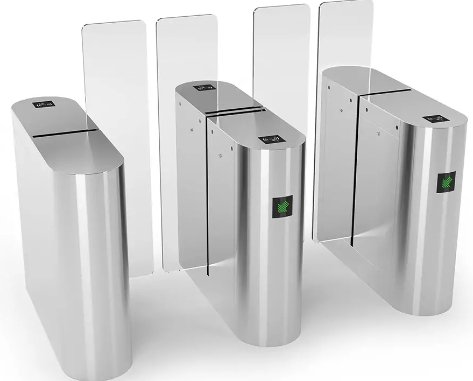
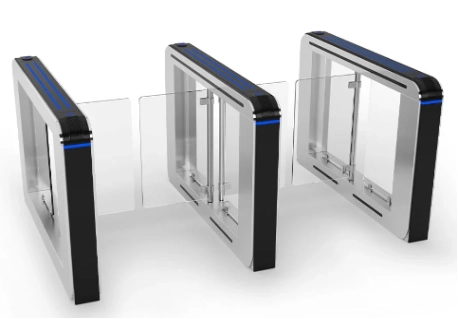
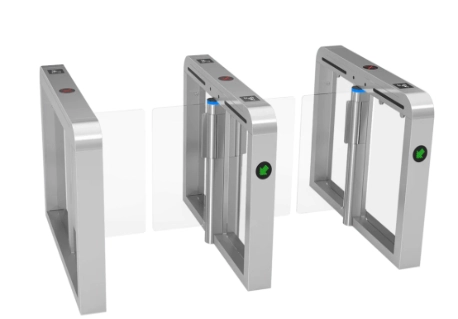
JS-STM002 High Speed Gate is designed for quick access control to offices, campuses and other commercial buildings and entrances.
This slim clear barrier enables a very clean lobby look. Access can be provided with card readers, QR code readers or biometric solutions. A dedicated facial recognition software device can also be integrated to enable hands-free access for authorized users at specific sites.
The emergency function should be programmed so that the panels open up when the approved fire alarm signal is sounded.
Flap and Sliding Turnstiles for High Traffic
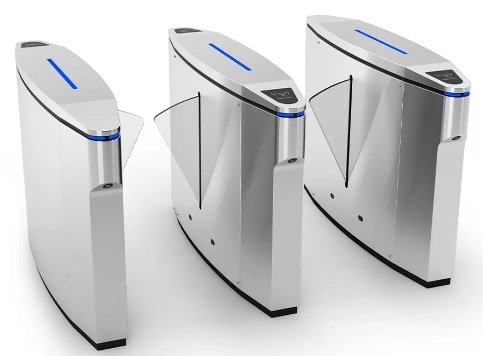
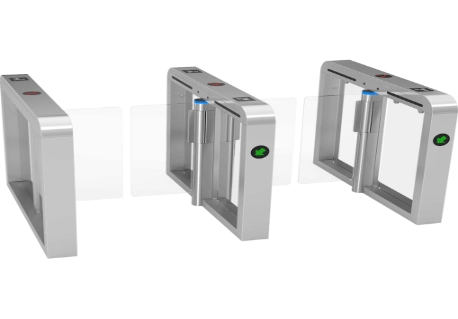
The JS-TD6301-21 Flap Barrier Turnstile Gate is constructed from SUS304 stainless steel, allowing it to be used both indoors and outdoors. A flap design provides clear indication of a lane being locked or free.
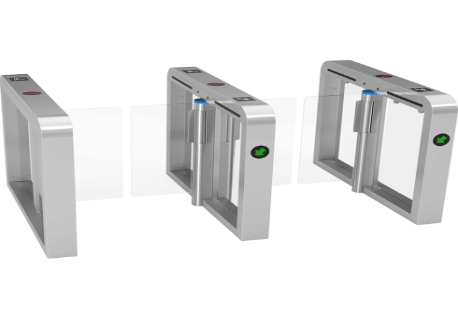
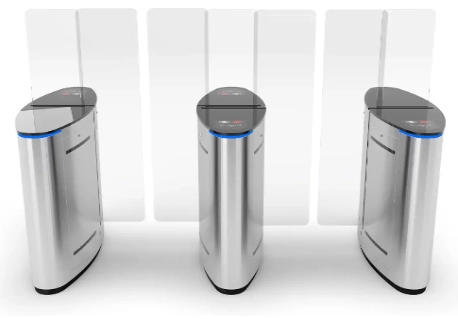
JS-PYZ002 Inclined Surface Sliding Turnstile incorporates a sliding glass barrier in a smooth and silent solution ideal for locations that experience high volume of traffic flow. These gates are best suited for commercial buildings, sports stadiums, schools and mass transit terminal entrances.
A turnstile at a metro station could be connected to a turnstile scanner, a QR code reader, a card system or a ticket validation system. In normal circumstances a metro station is working to get people through as fast as possible, in an emergency situation a station has an evacuation plan and the turnstiles would be operated accordingly.
Waist Height Turnstiles for Anti-Tailgating
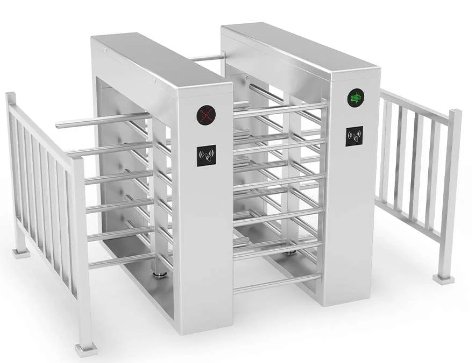
JS-BGZ002 Waist Height Rotating Turnstile Gate, Mechanical, Single Pass.
The blocker can be useful for industrial entrances, for restricted sites and for exterior access points where tailgating is a particular problem. The chassis size for this model is 1400mm x 2280mm x 1200mm.
As the structure is more restrictive than a swing or sliding lane, the emergency route and the accessible passage have to be planned carefully.
How Maintenance Supports Emergency Safety
Emergency functions must be tested on a regular basis, not only in case of an emergency. Regular maintenance of the turnstiles must also test mechanical and electrical functions.
Emergency Release Testing
A maintenance inspection should confirm:
1. The fire alarm signal reaches the controller
2. The barrier releases correctly
3. Manual release works
4. Sensors remain aligned
5. Alarm indicators operate correctly
6. Normal access control can be restored
Results from your observations should be recorded so the facility team can determine if similar problems are occurring.
Turnstile Scanner and Sensor Checks
A dirty or misaligned sensor could trigger false alarms or fail to open the gate. Turnstile scanners can also be affected by dirty or faulty wiring or unstable communication signals and cause delayed responses.
Technicians should check:
- Card and QR reader response
- Sensor alignment
- Barrier position
- Emergency input
- Indicator lights
- Controller communication
- Alarm output
- Manual release
Regular check-ups can help avoid unnecessary repairs of a turnstile and extend its lifespan.
Installation Quality
Before start commissioning a turnstile, the installer must check several points: floor level, anchor points, power supply, signal wiring, reader position and emergency input.
The final test should prove that:
- A valid credential opens the lane
- An invalid credential is rejected
- Tailgating alarms work
- The fire alarm releases the barrier
- Manual release works
- The system returns to normal operation
How KARSUN turnstile Supports Safer Access
Instead of using the same model for all applications, KARSUN turnstile selects the right products for the specific entrance.
A compact entrance for staff could be the JS-SGZ001 Bridge Tripod Turnstile Gate. This enables single person passage and is constructed from stainless steel, has an emergency alarm and drops the arm in case of power failure.
Die JS-STM002 Hochgeschwindigkeitstor is a fast access control pedestrian gate suitable for modern offices and commercial building lobbies. The gate can be connected to cards, QR code readers, finger print readers and facial recognition software.
Die JS-TD6301-21 Flap Barrier Turnstile Gate is designed for high-end entrances and offers a visible flap barrier, high quality stainless steel construction and efficient organization of pedestrian traffic.
For high-traffic applications, the JS-PYZ002 Inclined Surface Sliding Turnstile is equipped with a sliding quiet barrier, suitable for ticketing and access control such as metro station turnstiles.
Die JS-BGZ002 Waist Height Rotating Turnstile Gate provides one-person-at-a-time mechanical control to satisfy more rigorous anti-tailgating requirements.
We also help customers plan:
- Fire alarm signal linkage
- Manual setting
- Turnstile scanner integration
- Card, QR and biometric access
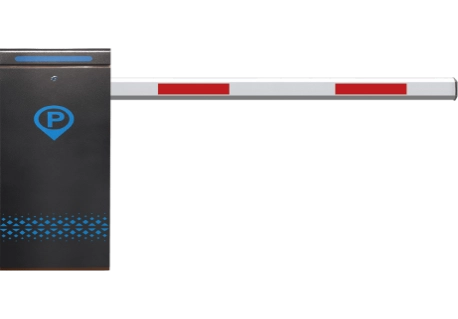
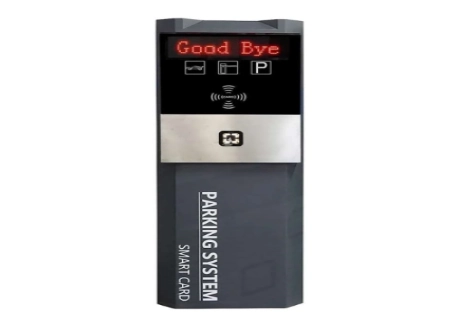
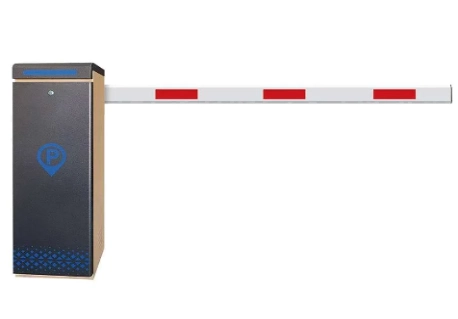
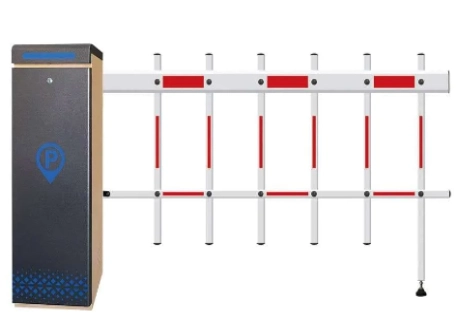
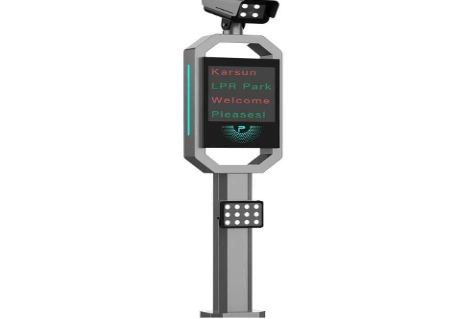
- Parking ticket system connection
- Ticket parking system workflows
- Installation and commissioning
- Turnstile maintenance and spare parts
There is no best turnstile gate as this largely depends on the volume of users, emergency plan and maintenance plan of the site. KARSUN turnstile helps customers plan and design the whole operation from access control to evacuation in case of emergency.
FAQs
Q: How should an emergency turnstile gate respond during a fire alarm?
A. The gate will receive the approved fire alarm signal and operate the barrier in accordance with the Building Evacuation Plan. The design may allow the arm to drop, the flap to open or the sliding panel to retract.
Q: Are tripod turnstiles safe for emergency evacuation?
A: A Tripod turnstile can also support an evacuation when a suitable fail-safe function has been incorporated and connected to the fire alarm system. The JS-SGZ001 Bridge Tripod Turnstile Gate has a drop-arm function in case of a power failure.
Q: What is the best turnstile gate for a busy metro station?
The best turnstile gate is determined by a number of factors including passenger flow, ticket validation, accessibility and emergency situations. We consider the JS-PYZ002 Inclined Surface Sliding Turnstile to be a suitable option for entrances with high volumes of ticket holding pedestrians.
Q: How often should turnstile maintenance include emergency release testing?
A: Test emergency release during regular maintenance checks and also after any changes to fire alarm, controller or access software. Regularity of tests will depend on usage of facility and degree of risk. Busy facilities may require more frequent testing.
Q: Can a facial recognition software device work with a fire safety turnstile?
A: Yes. A facial recognition software reader can be connected to the Facial Recognition Software device when the reader, controller and software are compatible. Emergency Release should still function when normal access has been disabled.