Tripod Turnstile vs Flap Barrier vs Speed Gate in 2026 Which One Fits Your Pedestrian Flow?
Individuals seldom complain about a gate if the entry process flows well. They pay attention, however, when a queue halts. They also spot situations where a scanner fails to read a badge. Problems arise if two users attempt to push through a single lane. For 2026, selecting a pedestrian gate goes beyond finding the sleekest cabinet. Rather, it involves pairing the hardware with actual foot traffic trends. Buyers must also factor in wheelchair access and the existing access-control system.
This guide looks at tripod turnstiles, flap barrier turnstiles, and speed gates using plain language. It details specific things to verify prior to making a purchase. Additionally, it highlights how KARSUN turnstile setups address various doorway challenges.

Why the Gate Type Changes the Whole Entrance Experience
A quick look at rotating arms flaps and sliding leaves
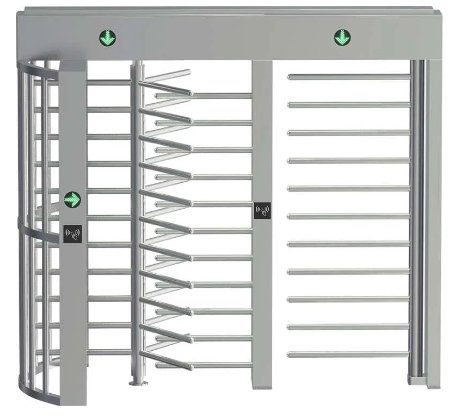
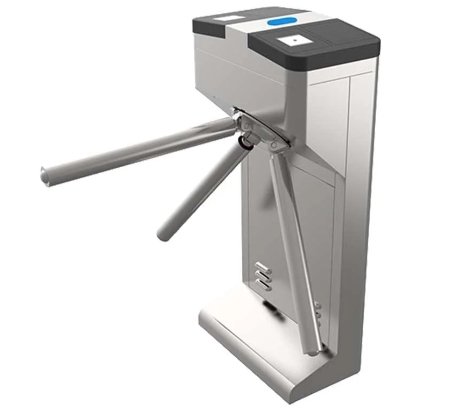
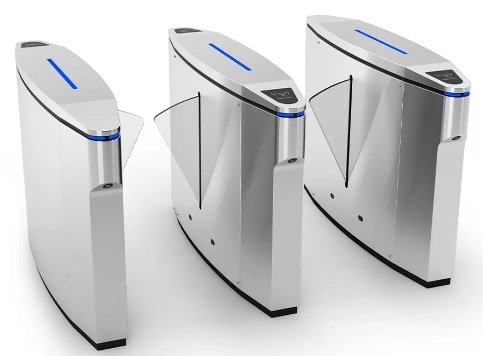
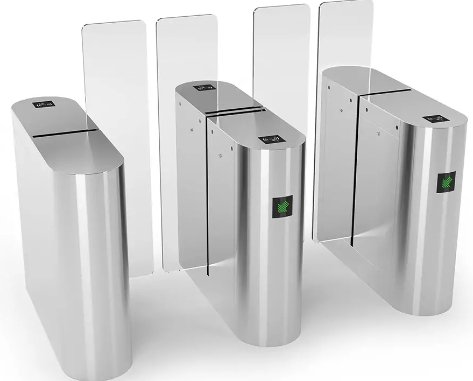
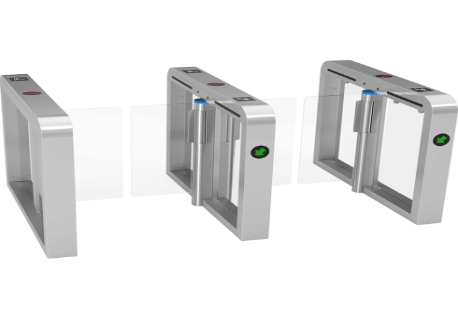
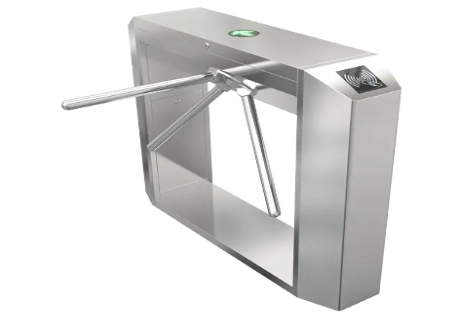
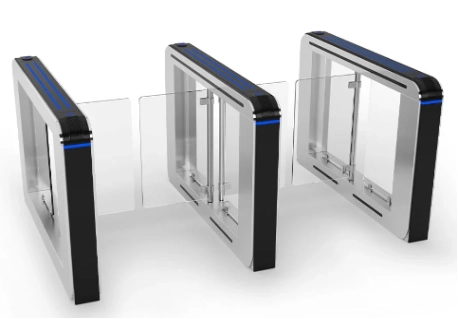
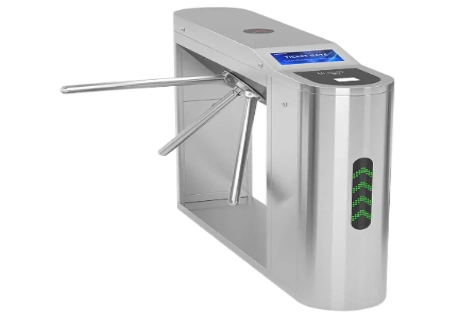
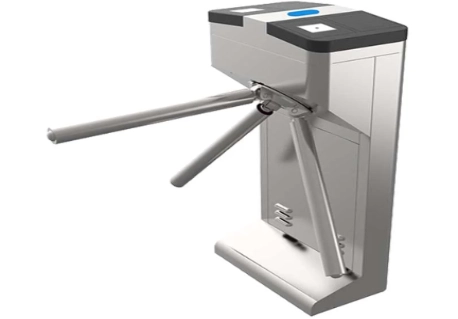
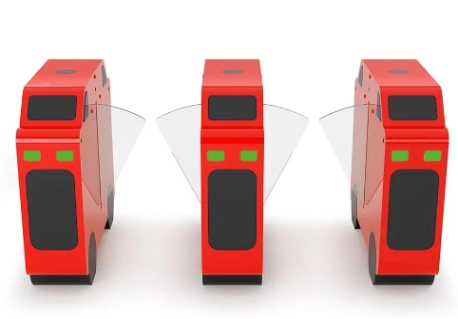
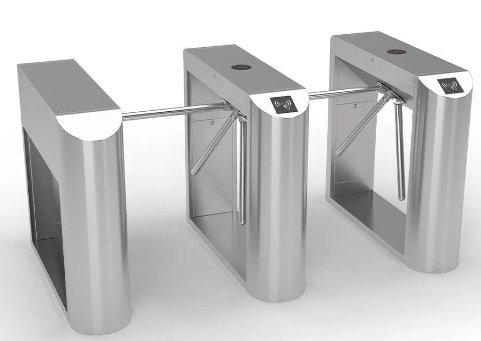
A tripod turnstile features three horizontal bars. Once a badge gets approved, a single user pushes the arm to walk through the path. Meanwhile, a flap barrier turnstile maintains a visually clear lane. Upon authorization, it retracts two panels away from the middle. A speed gate typically utilizes sliding leaves. These barriers part rapidly. They then shut once the person completes the crossing.
These distinct motions set specific user expectations. Tripod arms clearly enforce the single-entry rule. Flaps, on the other hand, offer a more welcoming vibe for guests. They often deliver a broader, less restricted path. Sliding leaves help create an elegant lobby environment. Within these spaces, silent operation holds equal importance to physical security.
Why credential speed alone does not define traffic flow
A scanner might validate a badge in mere milliseconds. Even so, waiting lines can still form. Users require extra moments to retrieve their cards. They must align them properly with the turnstile scanner. Pedestrians also take time to step forward and pass the safety sensors. A fast-opening gate placed too near a stairway often causes a traffic jam. This issue occurs just as frequently as it does with sluggish hardware.
The core issue ignores which model boasts the highest marketed speed. Instead, the focus rests on how many individuals can cross smoothly during peak rush times. Facility managers must also secure an accessible pathway. Furthermore, they need a secure protocol for handling rejected credentials.
How to observe peak arrivals before ordering
Monitor the main doorway during an actual shift swap, class dismissal, or train arrival. Document the longest line. Track the ratio of users relying on physical cards versus mobile phones. Additionally, tally the guests who require staff assistance. Observe if large bags or carts clutter the entry zone. Pay attention to the exact spots where pedestrians pause to dig for their badges.
This straightforward field study provides a solid foundation. It helps determine the ideal lane quantity and hardware style. This method works far better than looking at basic daily headcounts. It also highlights potential space conflicts. You will see if a ticket parking system, reception desk, or facial recognition software device shares that exact same entry area.
How Tripod Turnstiles Flap Barriers and Speed Gates Behave in Daily Use
One-person rhythm and queue control with tripod arms
A tripod turnstile operates in a very straightforward manner. Users scan, push forward, and walk through. This steady pace suits fitness centers, employee doors, and university campuses. It also serves ticketed arenas perfectly. In those places, management requires an exact tally of individual entries. The metal arms provide a firm visual warning. This barrier clearly indicates that tailgating remains strictly prohibited.
The main compromise involves physical effort. Pedestrians must navigate the bars at waist level. Someone carrying bulky luggage might require staff help. For a monitored lobby with steady foot traffic, this strict pacing proves highly beneficial. It frequently offers better control than a fully open pathway.
Open-lane movement and sensor logic in a flap barrier turnstile
Flap barriers offer a sleek aesthetic for hotels, smart buildings, and active indoor lobbies. Internal sensors monitor the pathway constantly. The flaps retract upon receiving a valid signal. Afterward, the main controller shuts the lane once the pedestrian exits the zone. This transparent look guides guests naturally toward the correct path. Meanwhile, the device still maintains a solid physical boundary.
Since this pathway feels quite open, facility managers must evaluate the tailgating alarms. They also need to verify reverse-entry alerts. Staff should check how the machine reacts if someone pauses directly between the moving panels. The turnstile scanner, optic sensors, and internal controller require testing as a unified network. Buyers must never treat them as isolated components.
Fast quiet passage with a speed gate or sliding turnstile
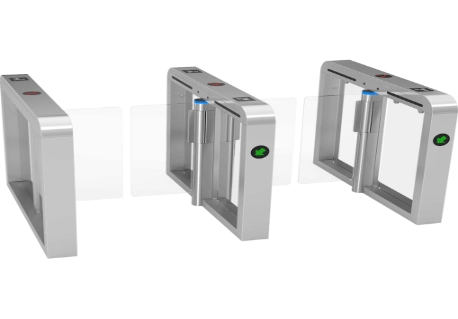
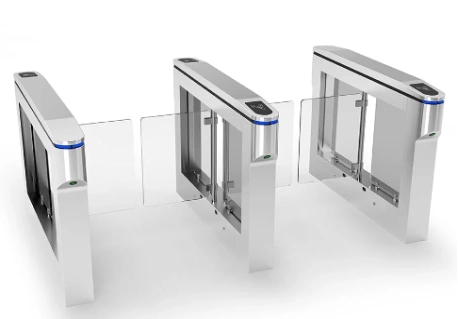
Speed gates and sliding turnstiles fit perfectly in corporate headquarters and high-end office towers. They also match transit-style hubs. These models belong in spaces where users demand rapid, silent operation. The leaves part and shut without the rigid pushing motion of a tripod. Consequently, the walking experience feels smooth for staff members who cross the boundary multiple times daily.
This particular design demands precise spatial planning. Tight corridors, shiny floor tiles, or dim lighting can complicate sensor calibration. Buyers should request a detailed commissioning schedule. This testing phase must address standard employees, temporary guests, and forced tailgating scenarios. It should also verify the emergency release functions. Complete these steps before signing off on the final floor layout.
Tailgating accessibility and emergency release checks
All three gate styles integrate seamlessly with RFID cards, QR codes, or biometric scanners. They can link up with a ticket parking system if the data signals match. However, no single gate acts as a flawless security shield on its own. Managers must evaluate how the equipment manages denied badges, sudden power outages, or active fire alarms. Additionally, observe how the setup accommodates individuals utilizing mobility equipment.
A handicap-accessible path might require expanded lane widths. It could also demand altered closing timers. Keep this special route clearly marked for everyone. Ensure the security team understands exactly when to trigger the manual override. During an emergency at a crowded venue, rapid evacuation remains the top priority. Life safety always outweighs keeping every single leaf or metal arm securely locked.
Which Gate Fits Different Sites in 2026
Gyms campuses and ticketed venues
For fitness centers or school grounds with regular visitors, a tripod turnstile typically provides a very simple single-person entry method. It achieves this goal at a reasonable price. An event location might also utilize a tripod setup equipped with a barcode or QR scanner. If the location draws families, people carrying bags, or numerous new guests, a flap barrier proves highly beneficial. This barrier style decreases confusion. As a result, it makes the entry path much simpler to navigate.
Corporate lobbies and premium buildings
A speed gate or sliding turnstile generally serves as the best option here. This applies perfectly when visual appeal, silent movement, and rapid staff entry are essential priorities. You should link the gate with a properly placed turnstile scanner or a facial recognition software device. Furthermore, maintain a manned guest walkway right next to these automated paths.
Hotels clubs and high-traffic public entrances
Lodging venues and private clubs frequently require a gentler physical barrier. A flap barrier turnstile fits perfectly in these specific settings. Busy public entry points demand much more than just a rapid gate. These areas require an adequate number of pathways. They also need bright indicator lights and obvious signage. Furthermore, workers must be present to fix rejected passes without delaying the entire queue. A metro station turnstile operates on this exact same concept, regardless of the facility size.
Indoor covered outdoor and weather-exposed layouts
Inside reception areas grant you greater flexibility regarding surface textures and sensor locations. Sheltered exterior pathways require careful planning for rain, dirt, and climate shifts. These setups must also resist strong washing solutions. Always verify the casing and metal type prior to selecting a unit. Numerous KARSUN turnstiles utilize SUS304 stainless steel. SUS316 is offered for specific setups if the surrounding climate requires superior rust protection.
What to Compare Before You Sign the Purchase Order
Reader position controller signals and turnstile scanner compatibility
Determine exactly where the scanning unit will rest. Consider how people will walk up to it. Furthermore, figure out the system response if an access card gets rejected. Verify if the main board utilizes dry contact, RS232, RS485, relay, or a different communication type. A turnstile scanner functions smoothly alongside tripod, flap, and sliding designs. This integration succeeds whenever the data format and the board communicate properly.
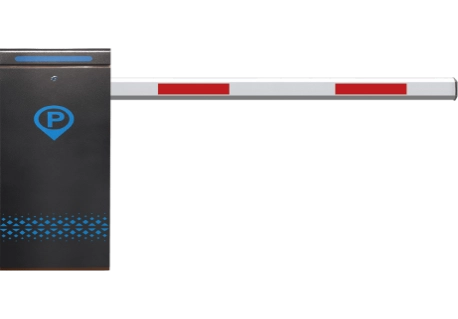
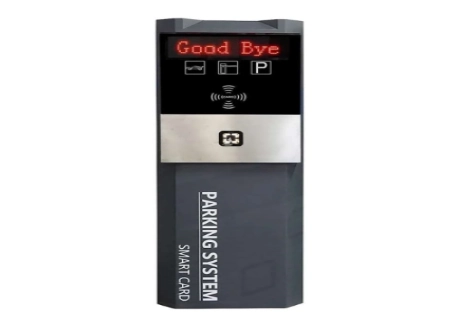
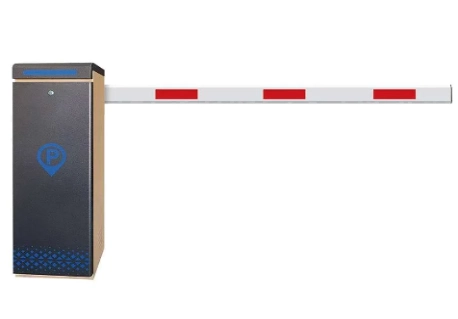
If a ticket parking system or parking ticket system plays a role, outline the data transfer process accurately. Specify exactly what approves the pass. Determine which command opens the barrier. Additionally, clarify what data the machine logs after a person walks through. This careful planning stops a vehicle-based routine from failing inside a foot-traffic area. It ensures you have a proven backup plan.
SUS304 or SUS316 casework and cleaning routines
Selecting stainless steel goes beyond mere visual preferences. Inquire about the metal grade, plate thickness, and whether the exterior is brushed or shiny. Moreover, investigate the daily washing habits practiced at the location. Ocean breezes, swimming pool chlorine, and constant sanitizing efforts heavily influence the ideal metal selection. Always maintain spotless scanning screens and lens protectors. This routine maintenance guarantees that a turnstile autocheck process operates flawlessly without interference from dirt or bright reflections.
Motor mechanism MCBF warranty and turnstile repair planning
The internal drive might feature a semi-automatic electromagnetic design, a brushless motor, or a servo motor. This detail relies entirely on your chosen setup. Evaluate the projected lifespan, sound levels, and safety actions during power failures. Additionally, examine the guarantee terms and the spare-component strategy. A cheaper initial cost offers no real benefit if a broken rod, detector, or circuit board forces a highly active entrance to shut down.
Find out who will manage turnstile repair duties. Discover which components remain stored nearby for quick access. Furthermore, determine how facility workers should document strange noises or constant scanning failures. A brief maintenance schedule easily catches minor physical shifts. Consequently, it prevents these tiny problems from causing a complete system failure.
Installation access lane width and the role of turnstile installers
Provide turnstile installers with a comprehensive floor plan prior to the shipping date. This blueprint needs to display the final ground height, bolting spots, and wire pathways. It must clearly indicate scanner elevation, passage width, and safety evacuation routes. Moreover, the document must highlight the open area required for maintenance tasks. Evaluate the pathway using the widest anticipated crowd type. Never evaluate the setup using merely a vacant hallway.
How KARSUN turnstile Helps You Match the Gate to the Entrance
At KARSUN turnstile, our process begins by analyzing your specific entry challenge. We never force a single machine style onto every property. Our team examines maximum crowd sizes, access card varieties, and spatial measurements. We carefully assess interior or exterior conditions, wheelchair access, and the system wiring methods. We complete these steps prior to suggesting any layout. Our standard communication links feature dry contact, RS232, and RS485. We gladly consult with you regarding the ideal drive unit and exterior texture for your facility.
For a basic, budget-friendly single-user pathway, we supply the JS-SGZ001 Bridge Tripod Turnstile Gate. Its solid SUS304 stainless steel build promotes orderly foot traffic. The machine links effortlessly with standard security networks. It serves as a highly functional option for employee doors, fitness centers, and secured event spaces. This model performs excellently in places where individuals already know the standard scan-and-push habit.
When a location requires a recognizable waist-level tripod layout featuring semi-automated movement, we gladly prepare the JS-SGZ002 Semi-Automatic Turnstile Tripod Gate. This unit matches the busy pace of sports arenas, theme parks, and transit stations. It equally suits restricted employee doorways. The fluid-dampened motion feature ensures the metal bar resets in a smooth, expected manner. A fully motorized upgrade remains available for discussion if your project demands that capability.
For a wider and more welcoming path, we utilize the JS-TD6301-21 Flap Barrier Turnstile Gate. Its optically tracked pathway perfectly suits lodging spaces, smart office towers, private associations, and workout facilities. It also fits nicely into transit-style entryways. Our technicians readily assist in planning the scanner data, alert triggers, and safety drop actions. This dedicated support guarantees the wings react reliably during allowed, denied, or blocked crossing attempts.
Whenever morning rushes are intense and the reception area demands swift, elegant motion, the JS-STM002 高速闸门 provides a premium rapid-entry solution. We gladly analyze available metals, surface treatments, and LED illumination styles alongside your architectural plans. Afterward, our engineers verify the scanner location and the circuit board programming prior to manufacturing. This careful approach proves highly valuable when the ideal turnstile gate must secure the doorway without giving a corporate space a harsh factory appearance.
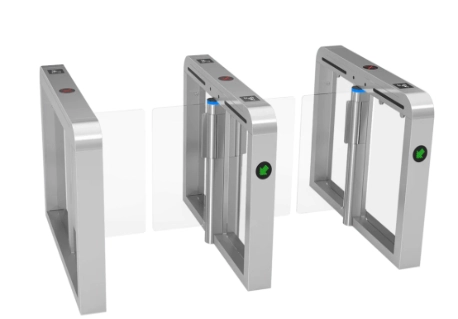
For a narrow space demanding fluid and silent performance, we present the JS-PYZ001 Octagonal Shape Sliding Turnstile. The retracting glass panels accommodate busy or visually demanding doorways. In such environments, a spinning rod might seem clumsy or out of place. We easily integrate this unit with a turnstile scanner, physical badge systems, or mobile barcode routines. We also blend it with the building’s guest management strategy. This coordination guarantees the corridor stays peaceful throughout heavy morning surges.
Our customer service extends far past the physical hardware. We readily offer OEM and ODM consultations, wiring confirmations, and setup instructions for turnstile installers. We additionally supply testing documents, component replacement strategies, and technical guidance for turnstile repair. If your specific job connects security gates with a facial recognition software device, a turnstile autocheck feature, or a ticket parking system, we carefully map the communication wires. We also establish clear trial scenarios prior to factory dispatch. This thorough groundwork ultimately transforms a simple brochure selection into a highly reliable foot-traffic solution.
常见问题s
Q: Which is better for a busy entrance, a tripod turnstile or a flap barrier turnstile?
A: A tripod turnstile creates a steady one-person rhythm and makes counting simple. A flap barrier turnstile gives a more open lane. It can feel easier for visitors or people carrying bags. Compare peak arrivals, accessibility, lane width, sensor behavior, and credential speed before deciding.
Q: How do I choose the best turnstile gate for a corporate lobby?
A: Start with the busiest arrival period, the desired appearance, the reader type, and the emergency plan. A speed gate or sliding turnstile often suits a modern lobby. Meanwhile, a tripod gate can be the better fit when simple, visible one-person control matters most.
Q: Can a turnstile scanner work with all three gate types?
A: Yes, it can work when the scanner, credential format, controller, and release signal are compatible. Confirm the wiring and communication method, such as dry contact, RS232, or RS485, before installation. Also, test rejected credentials and offline behavior.
Q: What should turnstile installers check before commissioning?
A: They should verify the finished floor, lane width, reader height, and cable route. They must also check sensor alignment, emergency release, power-loss behavior, and controller signals. Finally, they should check the handover test plan. The lane should be tested with normal users, visitors, and accessibility scenarios.
Q: How often will a commercial gate need turnstile repair?
A: There is no single interval because traffic volume, cleaning, weather, and mechanism type vary. Schedule inspections for sensors, arms or flaps, fasteners, controller connections, and moving parts. Report unusual noise, slow movement, or repeated read errors early. This ensures a small issue does not close the lane.