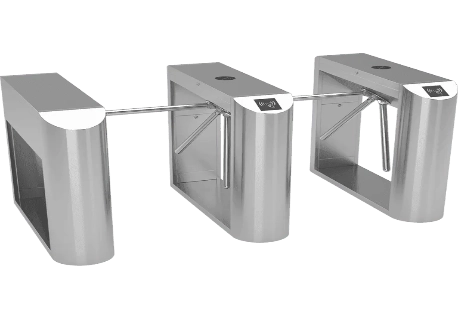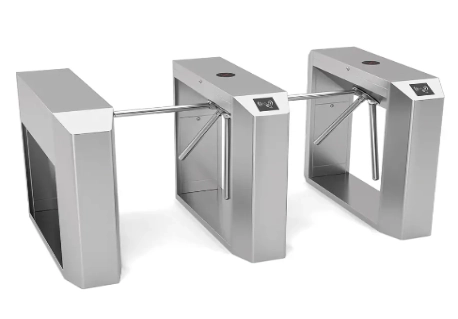
A tripod turnstile gate may look simple, but choosing one is rarely as easy as picking a cabinet and adding a card reader. Passage speed, outdoor exposure, access control compatibility, emergency behavior and long-term maintenance all affect whether the entrance works smoothly after installation.
In 2026, buyers are also paying closer attention to contactless credentials, real-time access data and lower ownership costs. This guide explains how to evaluate a tripod turnstile without getting lost in technical jargon.
What Is a Tripod Turnstile Gate?
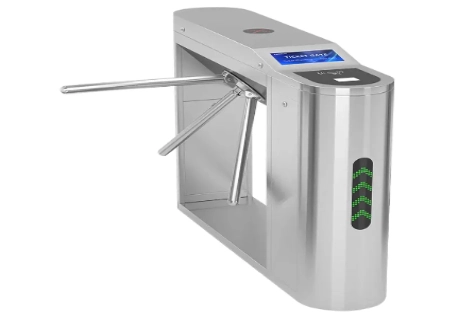
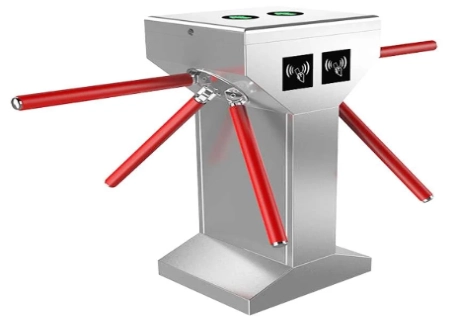
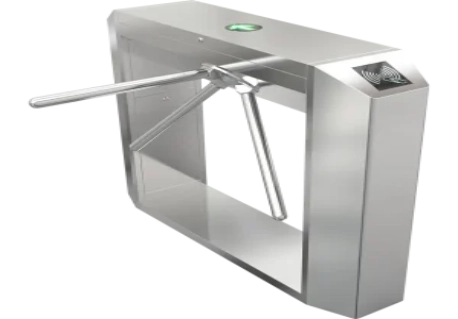
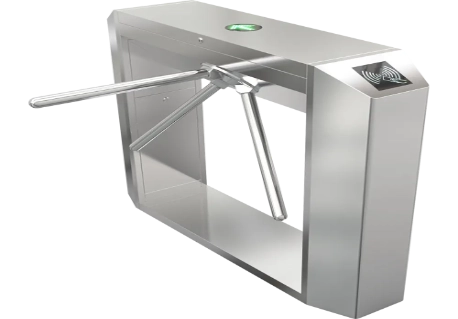
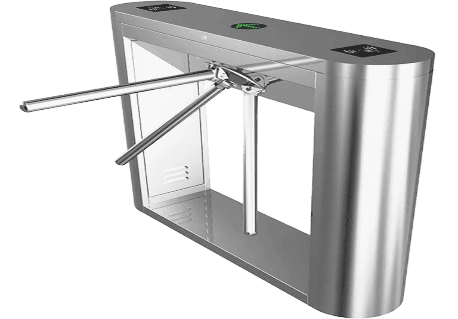
A tripod turnstile is a waist-high pedestrian access gate with three rotating arms. After a user presents an authorized credential, the mechanism unlocks and allows one person to pass. The arms then return to the blocking position for the next user.
This controlled one-person passage makes tripod turnstiles useful for offices, factories, campuses, gyms, stadiums, attractions and paid-entry facilities. Compared with an ordinary entrance, a turnstile access control system creates a physical checkpoint instead of relying only on a door, sign or security guard.
A tripod turnstile can work with RFID cards, QR codes, tickets, fingerprints or other authorization methods. The best credential depends on who will use the entrance and how often access permissions change.
Why Are Tripod Turnstiles Still Relevant in 2026?
Tripod turnstiles remain popular because they combine controlled passage with relatively compact construction and practical operating costs.
First, their rotating arms encourage orderly, single-person entry. This can reduce casual tailgating and make entry records more meaningful. Second, a compact tripod turnstile installation can fit entrances where a larger security structure would be inconvenient.
Modern units can also connect to attendance, membership and ticketing platforms. An RFID turnstile at a factory, for example, can verify an employee card and record arrival time in the same transaction. At a gym, the same basic setup can check whether a membership is active before releasing the arm.
The mechanical design is familiar to users, too. Most people immediately understand that they should validate a credential, wait for authorization and push the arm forward. That simple experience helps maintain traffic flow without constant staff instructions.
How to Choose the Right Tripod Turnstile Gate?
Calculate the Real Pedestrian Flow
Start with peak traffic rather than the average number of daily visitors. An entrance that feels quiet at noon may become congested when an entire shift begins at 8 a.m.
Estimate how many people must pass during the busiest five- or ten-minute period. Then consider credential-reading time, user hesitation and rejected credentials. A unit rated for a particular theoretical flow will not always achieve that number in real conditions.
KARSUN turnstile tripod models can support approximately 25–48 passages per minute, depending on the configuration and site conditions. However, adding more lanes may provide a better user experience than expecting one lane to operate continuously at its maximum rating.
Match the Cabinet to the Environment
An indoor lobby and an exposed construction-site entrance create very different demands. For outdoor tripod turnstile use, check the cabinet material, ingress protection and operating-temperature range.
SUS304 stainless steel is a practical choice for many indoor and outdoor locations because it resists everyday corrosion and wear. SUS316 may be preferable for coastal areas or environments with more aggressive moisture and chemicals.
Weather resistance does not eliminate the need for good installation. Drainage, a level concrete foundation, sealed cable routes and an overhead shelter can all extend equipment life.
Check Access Control Compatibility
Decide which credentials will be used before confirming the turnstile configuration. Common options include RFID cards, QR codes, tickets and biometric verification.
The turnstile controller must exchange the correct signal with the reader or access platform. Dry contact is widely used for basic release commands, while RS232 or RS485 may be selected for certain integrations. The installer should confirm the interface, signal duration and entry direction instead of assuming every device will connect automatically.
For an RFID turnstile, reader position matters as much as software compatibility. Users should be able to present a card naturally without reaching across the cabinet or blocking the lane.
Review Emergency and Power-Failure Behavior
Emergency operation should never be treated as an optional detail. Ask what happens when power is lost, a fire alarm is activated or an evacuation command is received.
A drop-arm function can release the passage during a power failure or emergency signal. The exact behavior should match local safety requirements and the facility’s evacuation plan. Emergency wiring and system response should also be tested after installation rather than merely listed in the specification.
Consider Maintenance and Total Ownership Cost
The lowest purchase price does not always produce the lowest long-term cost. Ask about the mechanism type, expected operating cycles, replacement parts, warranty and remote technical support.
A hydraulic buffer can make arm rotation smoother and reduce impact on the mechanism. Depending on the configuration, KARSUN turnstile offers electromagnetic mechanisms rated for up to five million cycles and brushless motor options rated for up to eight million cycles.
Which Tripod Turnstile Design Fits Each Application?
Bridge Tripod Turnstiles for Permanent Entrances
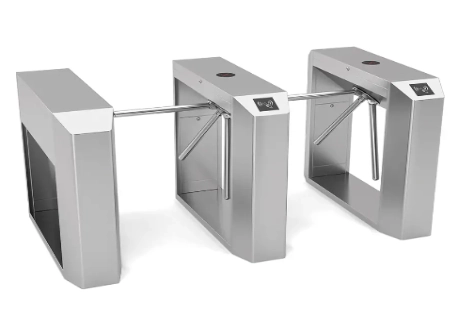
A bridge-style cabinet provides room for readers, controllers and internal wiring. It suits permanent entrances where the turnstile needs to integrate with an access control or attendance system.
This design is often a good fit for factories, office buildings and campuses. It also gives installers more internal working space than a compact vertical cabinet.
Vertical Tripod Turnstiles for Limited Space
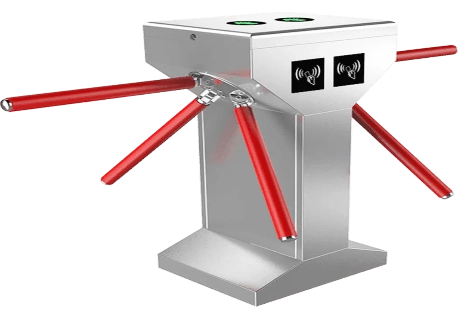
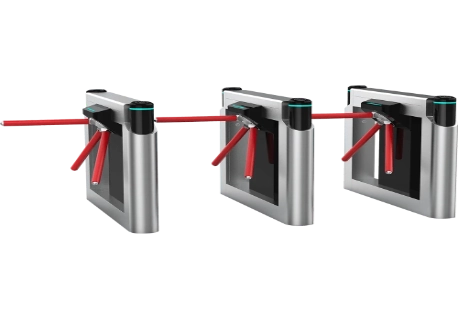
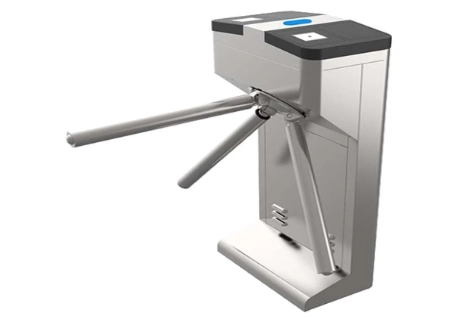
A vertical tripod turnstile uses a smaller cabinet footprint. It can be useful where the entrance is narrow or where maintaining an open visual layout is important.
The smaller cabinet means equipment placement must be planned carefully. Reader dimensions, controller space and cable routing should be confirmed before production.
Outdoor Tripod Turnstiles for Exposed Sites
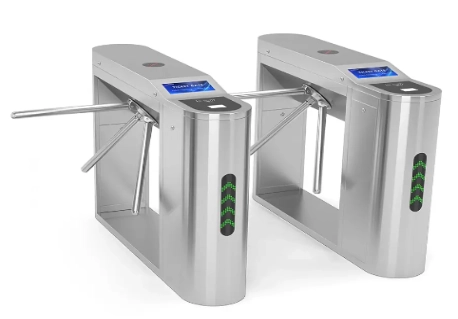
Outdoor installations require corrosion-resistant materials, suitable sealing and a stable foundation. An outdoor tripod turnstile may be used at construction sites, attractions, stadium entrances or open-air staff checkpoints.
Buyers should still distinguish between “outdoor capable” and “suitable for completely unprotected exposure.” A canopy and proper drainage remain sensible even when an IP-rated cabinet is selected.
Ticket Tripod Turnstiles for Paid Entry
Ticket-based models can provide space for ticket or QR verification at attractions and other controlled-entry venues. The system should handle invalid, duplicated and expired credentials without creating confusion.
Clear indicator lights and quick reader response are particularly important. If users need several attempts to scan a ticket, queues will grow long before the turnstile reaches its mechanical throughput limit.
What Common Selection Mistakes Should Be Avoided?
One frequent mistake is choosing a cabinet before studying the site. Floor space, lane width, nearby walls, emergency routes and cable access should be measured first.
Another is focusing only on the reader. A fast QR or RFID reader cannot compensate for poor lane planning, an incorrectly configured mechanism or confusing user indicators.
Outdoor buyers sometimes rely entirely on the stainless steel label. Material quality matters, but water entry can still occur through poorly sealed cable openings or an unsuitable foundation.
Accessibility is another important consideration. A standard tripod lane may not accommodate every pedestrian or mobility requirement. The entrance layout and operating procedures should therefore be evaluated against applicable accessibility and evacuation rules before installation.
Finally, avoid treating commissioning as a quick power-on test. Direction control, repeated credentials, invalid cards, alarm inputs, power failure and high-traffic conditions should all be tested.
How KARSUN turnstile Solves Tripod Turnstile Selection Challenges?
At KARSUN turnstile, we begin with the entrance rather than pushing one standard configuration. We review traffic volume, installation environment, credential method, control interface and emergency requirements before recommending a tripod turnstile.
For permanent access-controlled entrances, our JS-SGZ001 Bridge Tripod Turnstile Gate provides a 1200 × 280 × 980 mm SUS304 cabinet, a 25–48 passages-per-minute flow rate, IP54 protection and dry-contact, RS232 or RS485 integration options. It can be configured with an electromagnetic mechanism or a full-automatic brushless motor.
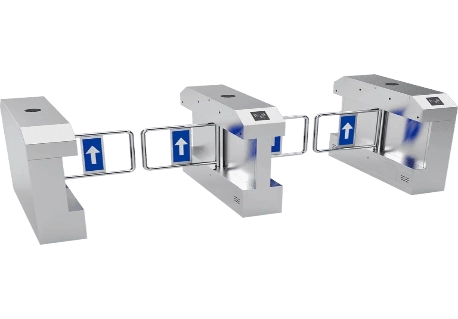
For projects requiring a straightforward controlled lane, our JS-SGZ002 Semi-Automatic Turnstile Tripod Gate offers a practical semi-automatic configuration that can support employee, visitor or membership access.
Where floor space is limited, our JS-SGZ003C Vertical Tripod Turnstile Gate provides a compact vertical format. We can plan reader placement and internal configuration around the available entrance dimensions.
For exposed locations, our JS-SGZ005 Outdoor Waterproof Stainless Steel 304 Tripod Turnstile Gate addresses weather resistance with a stainless steel outdoor-oriented structure. We also help customers review shelter, foundation and cable-entry conditions rather than relying on the cabinet alone.
For ticketed venues, our JS-SGZ006 Ticket Tripod Turnstile Gate For Outdoor is designed around verified paid entry and can be configured according to the intended ticket or QR workflow.
We provide OEM and ODM customization for cabinet size, appearance, functions and access interfaces. Our tripod turnstiles include a two-year warranty, and we offer installation guidance and remote technical support. These capabilities allow us to solve the practical selection problems discussed above—from throughput and integration to outdoor durability and emergency response. Product specifications and company capabilities are based on the official KARSUN turnstile product catalog and JS-SGZ001 technical page.
FAQs
Q: How does a tripod turnstile gate work?
A: A tripod turnstile gate remains locked until an access control system approves a credential. The mechanism then releases one rotation, allowing a single person to pass before the three-arm barrier returns to its blocking position.
Q: Can a tripod turnstile gate be used outdoors?
A: Yes, an outdoor tripod turnstile can be used when its material, ingress protection, temperature range and installation method suit the environment. The JS-SGZ005 Outdoor Waterproof Stainless Steel 304 Tripod Turnstile Gate is designed for outdoor-oriented applications, although a canopy and proper drainage can further improve service life.
Q: Can an RFID turnstile connect to an existing access control system?
A: An RFID turnstile can usually connect when the reader, controller and turnstile support compatible interfaces. Dry contact is commonly used for release signals, while RS232 or RS485 may be available for specific configurations. Compatibility should be confirmed before production.
Q: How many people can pass through a tripod turnstile per minute?
A: Throughput depends on the mechanism, credential-reading speed and user behavior. KARSUN turnstile tripod configurations can support approximately 25–48 passages per minute, but peak traffic should be assessed when deciding how many lanes are required.
Q: What should be checked during tripod turnstile installation?
A: A tripod turnstile installation should include a level foundation, secure anchor points, protected power and communication cables, correct reader placement and sufficient clearance around the lane. Direction control, rejected credentials, emergency inputs and power-failure behavior should be tested before the entrance opens.