How Do You Choose an Outdoor Full Height Turnstile in 2026?
A full height turnstile can look like a simple rotating cage, but choosing one for a factory, construction site, campus, or controlled perimeter is not a simple hardware purchase. The gate must fit the fence line, survive local weather, accept the right credentials, and respond correctly when power or the network fails.
This 2026 guide covers the questions to answer before an outdoor turnstile gate reaches the site. The aim is an entry point that matches the risk, traffic, users, and daily routine.
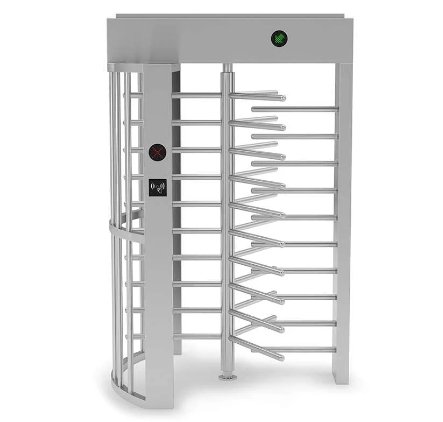
When Does a Site Need a Full Height Turnstile?
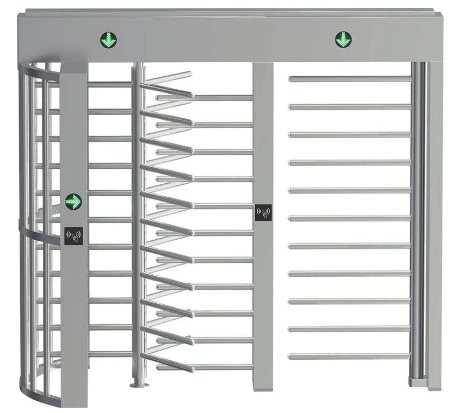
A waist-height gate organizes pedestrian flow, but people may climb over it. A full height turnstile creates a floor-to-top boundary and releases one authorized passage at a time. It fits employee entrances, fenced construction sites, storage yards, campuses, and other locations with limited supervision.
Start with the Security Problem
Write down what the entrance must stop: unregistered visitors, tailgating, out-of-hours entry, or wrong-way movement. A security turnstile gate cannot fix a gap beside the cabinet, a low fence, or a weak visitor process. The fence, gate, credential system, lighting, and guard procedure need to form one boundary.
Decide whether passage is one-way, bidirectional, or changes by time of day. A construction site may need separate entry and exit records.
Estimate Real Traffic Instead of Using a Headline Figure
Count people during the busiest five or ten minutes, then allow time for card taps, QR scans, rejected credentials, and visitors. A listed flow rate is measured under defined conditions; real throughput also depends on the reader and users.
One lane may suit steady traffic. A shift change may need two lanes or a dual-lane unit. Include a suitable route for wheelchair users, deliveries, and anyone unable to use the rotor.
How Should You Plan the Lane and Foundation?
A full height turnstile installation begins with a drawing. Mark the fence line, approach, rotation area, reader, cable route, and service space. Check assembled dimensions and the delivery route.
Build Around a Level, Stable Base
The rotor must stay vertical and aligned. Ask a qualified contractor to design the concrete foundation for the unit, ground, anchors, wind exposure, and local requirements. Put anchor positions and buried services on the approved drawing.
Plan outdoor conduits before pouring concrete. Provide protective earthing and drainage, and separate power and communication where the electrical design requires it.
Treat the Surroundings as Part of the Lane
Close side gaps, provide a straight approach, and position the reader so one user does not block the next. Signs should show travel direction and what to do after a rejected scan.
Emergency egress needs a separate review. Power-loss behavior must agree with the fire strategy and local rules; a normal access lane is not automatically an emergency exit.
Can the Turnstile Handle the Outdoor Environment?
“Outdoor” is not one condition. A covered entrance, coastal yard, and exposed construction site face different rain, dust, salt, heat, and cold. Match the published working environment to the location before ordering.
Check Rating, Material, and Exposure Together
An IP rating describes tested protection against solids and water; it does not cover every flood, salt, or cleaning condition. Review cabinet openings, readers, connectors, cable entries, and added access hardware—not only the steel body.
SUS304 stainless steel suits many general sites. Near salt or corrosive contaminants, ask whether SUS316 is appropriate. Stainless steel still needs cleaning. Drainage, a level raised base, sealed cable entries, and maintenance matter as much as material choice.
Plan for Weather on the Worst Day
Compare stated temperature and humidity limits with local extremes. Consider direct sun, driven rain, mud, and construction dust. A canopy can improve comfort and reduce direct exposure even when the gate has a suitable rating.
Which Access Control and Safety Details Matter?
The turnstile is the physical decision point; the access-control system decides who may pass. Map the reader, controller, software, release input, passage confirmation, alarm, and event record.
Define Credentials and Exception Behavior
RFID cards are convenient for regular employees; QR codes can suit visitors or temporary workers; facial recognition may support hands-free entry where lawful and appropriate. The important question is compatibility. Confirm the electrical or communication interface, reader mounting, authorization time, and data responsibilities with every system provider.
Test awkward cases: an expired QR code, two rapid taps, a failed face match, a network outage, or a user turning back. Decide who can release the gate manually and how it is logged. A 2026 plan also needs privacy, cybersecurity, credential lifecycle, and fallback procedures.
Test Safety as a Complete Journey
Confirm responses to power loss, alarms, a blocked rotor, and invalid entry. Test both directions and every credential before handover. Keep the wiring diagram, settings, manual, acceptance record, and maintenance log together.
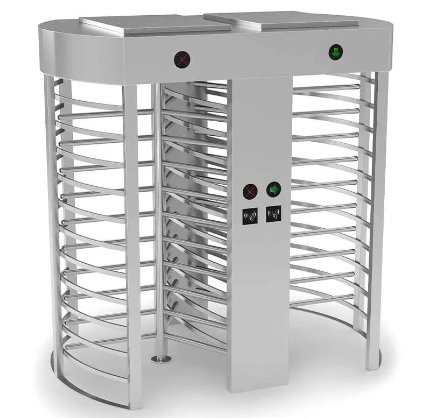
How Does KARSUN turnstile Solve Outdoor Entry Challenges?
At KARSUN turnstile, we begin with site exposure, peak traffic, credentials, direction, accessible routing, and emergency logic. We then match the physical configuration and control interface. Relevant full height models list indoor/outdoor operation, IP54, SUS304 casework with optional SUS316, AC 220V/110V 50/60Hz supply, and customizable dry-contact, RS232, or RS485 control. Final specifications require confirmation for the ordered configuration.
For a straightforward single controlled lane, the JS-QGZ001 Signal Lane Full Height Turnstile Gate Stainless Steel 304 Security Gate for Entrance has listed dimensions of 1500 × 1450 × 2300 mm. It is a practical starting point when the perimeter needs one-person-at-a-time entry and the project already has a compatible credential system.
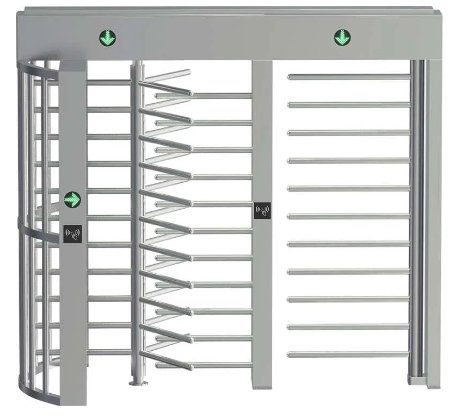
Where two streams must share one assembly, the JS-QGZ004 Dual Lane Full Height Turnstile Bi-directional RFID QR Code Access Control System combines a dual-lane layout with listed RFID and QR access. Its published size is 2300 × 1450 × 2300 mm, so we ask buyers to verify foundation space, peak-direction demand, and the QR or RFID system interface early.
Die JS-QGZ005 Dual Lane Full Height Turnstile Gate 120 Degree Rotate Security Gate is another dual-lane option with a 120-degree rotor for projects comparing both rotor geometry and lane count.
For identity-led entry, the JS-QGZ008 Signal Lane Full Height Turnstile Gate with Face Recognition Access Control System pairs a single lane with face recognition. Listed options include a semi-automatic electromagnetic mechanism with hydraulic buffer or a full-automatic brushless motor. We still confirm privacy, failed matches, network behavior, and a fallback credential.
Finally, the JS-QGZ011 Signal Lane Full Height Turnstile Gate with Handicap Lane adds a separate passage and lists overall dimensions of 2520 × 1350 × 2300 mm. The project designer must still verify clear width, reader height, approach space, emergency use, and local accessibility rules.
We can review material choice, lane direction, access method, control signals, and installation guidance, turning a stand-alone mechanism into a workable entrance.
FAQs
Q: How does a full height turnstile improve site security?
A: A full height turnstile forms a floor-to-top barrier and releases controlled passage after authorization. It works best when side gaps, fencing, credentials, lighting, and operating procedures are planned as one perimeter.
Q: Can an outdoor turnstile gate work in rain and extreme temperatures?
A: It can when its stated IP rating, materials, temperature range, cable sealing, foundation, and drainage match the site. Check the reader and added electronics too. KARSUN full height models listed above state indoor/outdoor operation and IP54, but the final configuration and local extremes should be confirmed before ordering.
Q: What foundation is needed for a full height turnstile installation?
A: A full height turnstile installation needs a stable, level base sized for the equipment, anchors, ground conditions, and local loads. A qualified contractor should finalize the concrete and fixing design. Plan conduits, earthing, drainage, and service access before pouring the foundation.
Q: Can an access control turnstile use RFID cards, QR codes, or face recognition?
A: Yes, if the reader, controller, software, and gate interface are compatible. JS-QGZ004 Dual Lane Full Height Turnstile Bi-directional RFID QR Code Access Control System lists RFID and QR access, while JS-QGZ008 Signal Lane Full Height Turnstile Gate with Face Recognition Access Control System is designed around face recognition.
Q: How many security turnstile gate lanes does a factory need?
A: Count people during the busiest short arrival period, then include credential-reading time, rejected scans, direction changes, visitors, and an accessible route. A steady workforce may use one lane; a concentrated shift change may need a dual-lane security turnstile gate or multiple controlled lanes.